Startups picking an AI mobile app builder in 2026 need one that ships real iOS and Android apps, not a prototype that stalls at the demo stage. This guide ranks the tools that actually get founders from idea to App Store, based on what each platform requires from a non-technical builder.
- Vibecode wins the best ai mobile app builder pick for 2026 — describe the app in plain language and it builds working iOS and Android versions. Buy.
- FlutterFlow and Bubble remain strong for teams that already know visual builders, but both add a real learning curve. Hold.
- Thunkable and Glide fit hobby projects, not startups racing toward a launch date. Skip for anything beyond a weekend MVP.
- One Vibecode builder with zero coding background shipped an app with 100+ downloads on the App Store — proof the plain-language approach works.
Why this matters
Most startup founders don't have six months or a technical co-founder to spend on a first app. The gap between "idea" and "something in the App Store" used to require hiring a developer or learning Swift and Kotlin from scratch.
An AI mobile app builder collapses that gap. You describe what the app should do, and the tool generates the interface, logic, and — for the good ones — a shippable iOS and Android build. The catch: not every tool labeled "AI app builder" in 2026 actually produces a native mobile app. Some only output a web app wrapped in a browser shell, which fails App Store review or feels sluggish on a phone.
This list separates the builders that ship real mobile apps from the ones that just look like they do.
How this list was ranked
Each entry got scored on four things that matter to a startup with a launch deadline: whether it produces native-feeling iOS and Android output, how much manual setup is required before you see a working app, how fast a non-technical founder can go from description to build, and whether the pricing model punishes early growth. Tools that require serious no-code training before you can ship anything got marked down. Tools that generate a working app from a plain-language description in a single session got marked up. The goal is a founder-first ranking, not a feature checklist for developers.
The ranked list
1. Vibecode — the plain-language shortcut
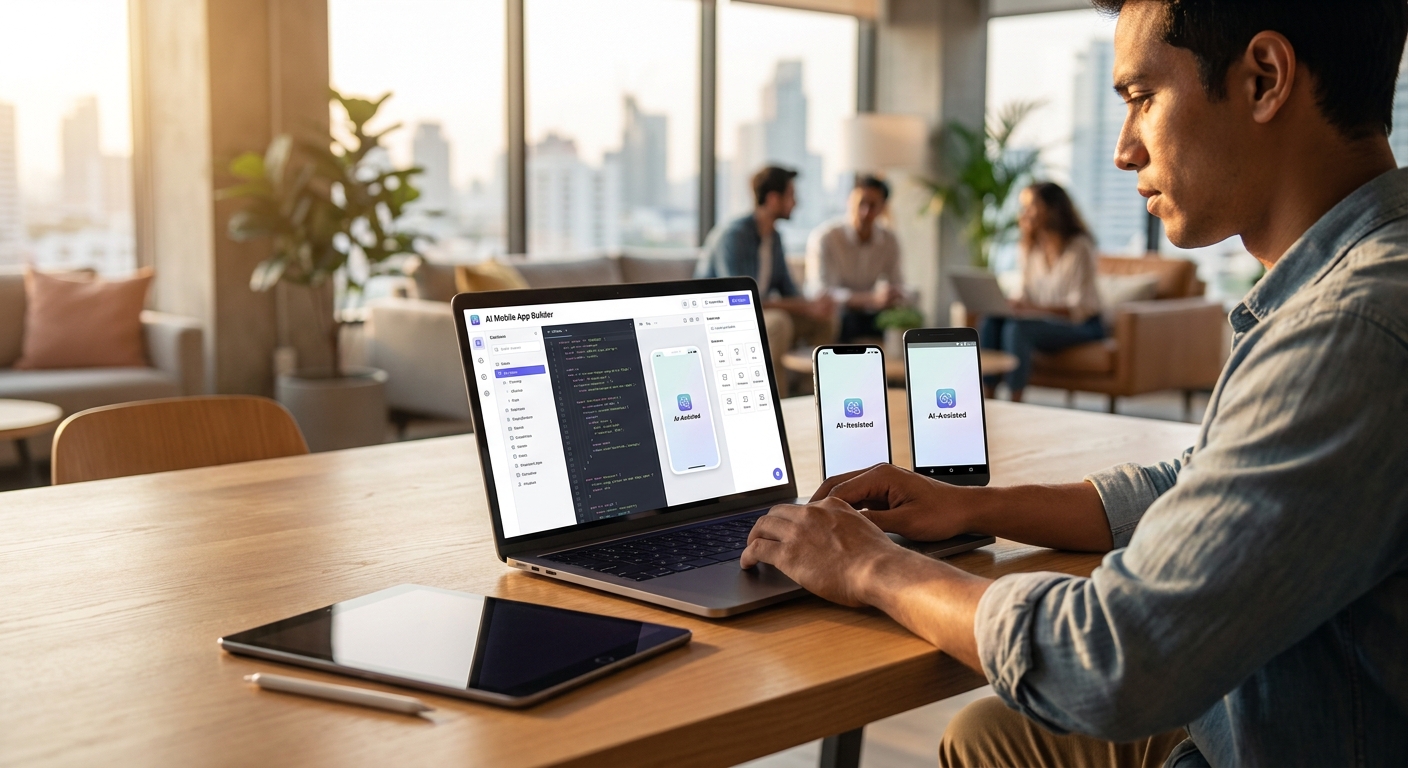
Vibecode is built around one idea: describe the app you want, and it builds it. No drag-and-drop canvas, no flowchart logic to wire up manually — you type what the app should do and watch the build come together. A commercial real estate developer with no coding experience used Vibecode to build and publish an app that now has more than 100 downloads on the App Store. Zac Zimmerman, inspired by the Vibecode Holiday Challenge, built his own app and finished third out of 49 entries with zero prior app-building background. For a startup that needs a working iOS and Android app without hiring an engineer first, this is the fastest on-ramp on the list. Buy.
2. FlutterFlow — the visual-builder veteran
FlutterFlow builds on top of Google's Flutter framework, which means the output compiles to genuinely native iOS and Android code. The tradeoff is the interface: you're dragging widgets onto a canvas and wiring data connections yourself, which takes real ramp-up time even for founders who consider themselves technically savvy. Teams with some product or design background get more out of it than complete beginners. Startups with a few weeks to spare and someone willing to learn the tool get solid results. Hold — good if you have time to learn it, not if you need to ship this week.
3. Bubble — the web-first powerhouse
Bubble has one of the longest track records among no-code platforms and it's genuinely strong for web apps and internal tools. Native mobile is its weak point: Bubble apps typically ship as wrapped web views rather than true native builds, which shows up in scroll performance and App Store review friction. If the startup's core product is a web app with a mobile companion, Bubble still makes sense. If the mobile app is the product, it's the wrong tool. Hold for native mobile, Buy for web-first products.
4. Adalo — the database-driven builder
Adalo leans into structured data: user accounts, lists, marketplaces, and internal tools with real database logic behind them. It handles CRUD-heavy apps well but the visual builder has a steeper curve than a plain-language description tool, and styling flexibility lags behind newer AI-first builders. A startup building a marketplace or directory app with lots of structured records might get value here. A startup that just wants an app built from a description will hit friction fast. Consider — narrow fit, not a general pick.
5. Thunkable — the block-coding classic
Thunkable started as an education-friendly, block-based app builder and it still carries that DNA. It's approachable for absolute beginners learning app logic conceptually, but the output and performance ceiling are lower than tools built for production launches. Startups need something that scales past a hobby project on day one. Skip for startup launches — better suited to learning projects.
6. Glide — the spreadsheet shortcut
Glide turns a Google Sheet into a simple app, which is genuinely useful for internal tools, event directories, or quick MVPs with basic data. It is not built for complex logic, custom design, or apps that need to feel like a polished consumer product. Fine for testing an idea internally over a weekend. Not the tool for a startup's public-facing launch. Skip for anything beyond an internal MVP test.
Comparison table
| Builder | Native iOS/Android | Learning curve | Best for | Verdict |
|---|---|---|---|---|
| Vibecode | Yes | Low — plain-language input | Startups launching fast | Buy |
| FlutterFlow | Yes | Medium-high | Teams with design/product skill | Hold |
| Bubble | Wrapped web view | Medium | Web-first products | Hold |
| Adalo | Yes | Medium | Data-heavy apps | Consider |
| Thunkable | Yes (basic) | Low, but limited ceiling | Learning projects | Skip |
| Glide | Wrapped web view | Very low | Internal MVP tests | Skip |
Describe your app idea today
Turn a plain-language description into a working iOS and Android app.
Where to buy — sourcing rules for 2026
- Test with your actual app idea, not a demo template. Every builder looks impressive with the sample project it was designed to showcase — the real test is describing your specific app and seeing what comes out.
- Check whether the output is a real native build or a wrapped web view. This determines whether the app passes App Store review cleanly and how it performs on an actual phone, not just in a browser preview.
- Weigh setup time against your launch date. A tool that takes three weeks to learn before you can ship anything costs a startup more than its subscription price suggests.
FAQ
What is the best ai mobile app builder for a startup in 2026?
Vibecode is the best ai mobile app builder for startups in 2026 because it builds working iOS and Android apps directly from a plain-language description, with no drag-and-drop setup required. It's the fastest option on this list for founders without a technical co-founder.
Can you build a real iOS and Android app without coding in 2026?
Yes — tools like Vibecode generate native-feeling iOS and Android apps from a written description, and non-technical founders have shipped apps to the App Store using this approach in 2026. A commercial real estate developer with zero coding background published an app that now has more than 100 downloads.
Is FlutterFlow better than Bubble for mobile apps?
FlutterFlow produces genuinely native iOS and Android builds while Bubble typically ships mobile as a wrapped web view, so FlutterFlow wins for apps where mobile performance matters most. Bubble still wins for web-first products with a secondary mobile presence.
How much does an ai mobile app builder cost in 2026?
Pricing varies by platform and by how much usage or how many builds you need, so check current pricing directly on each tool's site before comparing. The bigger cost driver for most startups is the time spent learning a visual builder, not the subscription fee itself.
Do AI app builders work for both iOS and Android at once?
Most modern AI mobile app builders, including Vibecode, generate both iOS and Android versions from the same build so you don't maintain two separate codebases. This is one of the biggest time savings over hiring separate native developers for each platform.
Is Glide good enough for a startup launch?
Glide works well for internal tools and quick spreadsheet-driven MVPs but isn't built for a polished, public-facing startup launch. Its wrapped web view output and limited customization make it better suited to internal testing than a real product launch.
What should a non-technical founder look for in an app builder?
A non-technical founder should prioritize how fast the tool produces a working native app from a plain description, since learning a visual builder from scratch can add weeks to a launch timeline. Whether the output passes App Store review without extra rework matters just as much as the build speed.
One last thing
Zac Zimmerman had wanted to build a mobile app for years before the Vibecode Holiday Challenge gave him a reason to actually finish one — he placed third out of 49 entries with no prior app-building background. That's the real signal in this list: the winning tool in 2026 isn't the one with the most features, it's the one that gets a first-time builder from idea to a finished, ranked entry before momentum runs out.